
History Spotlight: The Origins of Fort Benning (Part 2)
- Historic Columbus
- 5 days ago
- 9 min read

Updated: 3 days ago
SOURCE: The Origins of Fort Benning by Charles E. White, Ph.D. Command Historian, U.S. Army Infantry Center and School Ft. Benning, Georgia. Muscogiana Journal, 1995.
On 21 May 1918, the War Department issued Special Orders Number 119, appointing Colonel Henry E. Eames head of a board of officers to meet at Fort Sill "for the purpose of selecting a site for the Infantry School of Arms." Paragraph Four of this order reads:
In regard to the size of the firing area, it is believed that not less than 400 square miles will be necessary to meet the minimum requirements of the school, which is to be organized to train a minimum of 600 non-commissioned officers and 102 officers per week in a ten-week course.
The board consisted of three infantry officers: Colonel Eames, Lieutenant Colonel Charles E. Reese, and First Lieutenant George V. Pope; and one medical officer: Major Thomas S. Lowe. Eames and his colleagues considered a number of possible locations but disqualified most due either to severe winter weather conditions, unsuitable terrain for training and maneuver, remoteness of the site, or excessive transportation costs when moving men and equipment to and from the site. After several months of deliberation, the board narrowed its options to three locations: Fayetteville, North Carolina, Columbus, Georgia, and West Point, Kentucky. In early September 1918, the War Department chose Columbus, Georgia, officially because it was north of the malaria belt.

Unofficially, inter-service rivalry may have played a role in the selection of Columbus as the new home of the Infantry. During the same time Colonel Eames and his associates were searching for an Infantry training site, the Artillery was also looking for an area larger than Fort Sill. According to Lieutenant Pope, the Infantry Board had originally recommended Fayetteville, North Carolina, as its first choice. But General Peyton March, the War Department Chief of Staff, and an artilleryman, was so impressed with reports about Fayetteville, that he is reported to have remarked: "If Fayetteville is all that damned good and the infantry wants it, maybe the artillery should have it." Not coincidentally, the Artillery acquired Fayetteville as its new training area. That left Columbus as the best available site for the Infantry. On 18 September 1918, the War Department directed the Infantry School of Arms at Fort Sill to move "all its personnel, property, and equipment to Columbus, Georgia, by October first."
News of the War Department's decision to establish the Infantry School of Arms near Columbus thrilled most local residents. It was the climax of nearly two years of civic effort to locate a major Army training center in this area. Since early 1917, when the War Department had announced its intention "to choose a camp site in the South to train men for the American Expeditionary Force," the Chamber of Commerce had inaugurated a campaign to bring that cantonment area to Columbus. The city sent delegates to Washington, Atlanta, and Charleston to arouse interest among Army leaders in the Columbus area. Within weeks, General Leonard Wood, then in command of the Southeastern Department at Charleston, sent his aide to inspect and report on the Columbus locality. Major Lee's favorable report was an auspicious beginning. Throughout 1917, Army inspectors had made at least four additional trips to Columbus, and each time they were favorably impressed. In fact, I found no unfavorable reports on Columbus. To the Army, this area appeared to be an almost ideal training location. Nevertheless, in July 1918, the Infantry Board had designated Columbus as its second choice behind Fayetteville.
Disappointment followed the War Department's first announcement that had completed its selection of cantonment sites and Columbus was not among them. It appeared that all the valiant efforts of the local community had ended in defeat. The Columbus Ledger and the Enquirer-Sun Newspapers reported that "no city had sought more consistently to get a camp, and had met with less success," But to some residents, mainly from Chattahoochee County, a military post was "a menace to religion, home, and womanhood." On the other hand, this initial setback seems to have strengthened the city's determination.

It is here that Lieutenant Pope's observation about General March may have some validity. Shortly after the War Department's announcement excluding Columbus, Frank Lumpkin, Sr. (pictured above) and Senator William Harris arranged a little "get-together" in Washington for selected military and civilian leaders. Georgia hospitality, which included some of Mr. Lumpkin's finest corn whiskey, proved decisive. Within days, the War Department chose Fayetteville as the new training area for the Artillery. Now the Infantry had no home. Fayetteville had been its choice. Anger filled the hearts of many infantrymen; for the War Department had originally decided that the Artillery would remain at Fort Sill. With Fayetteville gone, the Infantry now focused its eyes on Columbus. On 17 August, John Betjeman, Columbus' resident agent in Washington, notified the Chamber of Commerce that the Army General Staff had approved plans to locate the Infantry School of Arms near Columbus. In his report, Betjeman wrote: "Major J. Paul Jones is here working on the plans and estimates for this school." The official War Department announcement came a month later on 18 September.
The task facing Major Jones was monumental. He had approximately two weeks to build a camp for approximately 1200 men. As he later wrote in his official report:
I was informed that troops were en route to Columbus, Georgia, and that although there had been no money allotment made, nor had the project been formally approved by the Secretary of War, I was to proceed with the building of the cantonment.
At this point, the residents of Columbus rallied in support of the Army. Major Jones and his party arrived in Columbus on the morning of 24 September and were met by Colonel Eames and civic leaders. Together they outlined their strategy. They had approximately one week to plan, organize, and construct the camp before the troops arrived on 1 October. A temporary site was located at the Alex Reid place, consisting of eighty-four acres, on Macon Road at Dixon Road, where Columbus Square Mall (now the Columbus Public Library) now stands. Here, I'd like to begin quoting from Major Jones' journal in order to give a flavor of the times. According to Jones, the project took on the "aura of a vast community effort." It reminded me of an Amish barn-raising.

The entire city of Columbus, organized through its Chamber of Commerce and other civic organizations, helped build the camp. They assisted in securing both common and skilled laborers from the surrounding county. All lumber and mill orders from civilian sources were set aside, and orders pertaining to the camp were given the right-of-way. The W.Z. Williams Company, contractors from Macon, Georgia, agreed to undertake the construction of this temporary camp and wait for their money until the proper authorization had been obtained to repay them.
On 25 September, the day after Jones had arrived in Columbus, the War Department Construction Division, under Project Number 209-1, authorized the expenditure of $100,000 "to provide temporary accommodations for troops at Columbus, Georgia." Continuing, Major Jones writes:
The Columbus newspapers appealed for help, and the first Sunday, some forty trucks were loaned to the Government to haul lumber and materials to the camp site. In many cases, the truck owners themselves reported as drivers in order to help as much as possible.
Whenever problems arose, it was the community that solved them. As Jones states:
At first, the lumbermen insisted upon thirty-five dollars per thousand as their lowest price and said they could not meet the emergency price of thirty dollars per thousand, which prevailed throughout the South. However, after appealing to their town pride and sense of patriotism, they agreed to meet the lower price of thirty dollars per thousand.

To the amazement of all, "roads were built, electric lights installed in the building, water mains laid, mess halls, warehouses, and 300 tent frames were practically completed when the troops arrived" on 6 October. In his final report, Major Jones wrote:
The entire camp was completed in 14 days, and there had been built in that time: four warehouses, five mess halls, eight latrines, eight bath houses (company size), one garage, one two-store infirmary, two standard stables, one corral, fenced, sixty-five officer pyramid tent floors, 300 enlisted tent floors, and approximately two miles of gravel road.
It was a great accomplishment, and the beginning of a long tradition of mutual cooperation and friendship between the citizens of Columbus and the personnel of Fort Benning.
Meanwhile, on 5 October 1918, Colonel Eames had been appointed Commandant of the Infantry School of Arms. As the troops settled into their new home, Colonel Eames, his staff and Reynolds Flournoy (representing the Chamber of Commerce) began looking for a permanent training site. (The Columbus Chamber of Commerce leadership included A. F. Kunze, president, and among the directors were Homer McClatchey, Marshall Morton, Reynolds Flournoy, J. Albert Kirven, and T. T. Miller.)
They selected an area south of Columbus on the plantation of Arthur Bussey. Action to acquire the land was initiated immediately. On 18 October, Columbus held a flag-raising ceremony to christen the new camp. In compliance with a request made in September by the Rotary Club, the cantonment area was named "Camp Benning," in honor of Confederate General Henry Lewis Benning — the most renowned soldier from this vicinity during the Civil War. Miss Anna Caroline Benning, the late General's daughter, raised the ceremonial flag. The very next day, Congress approved an expenditure of $3,600,000 for the purchase of what would become Fort Benning's 180,000-acre (approximately) reservation today. The purchase (originally 1,800 acres) also included the large frame house named "Riverside," Arthur Bussey's summer home, which now serves as the home of the Commanding General. On 30 October, the Secretary of War approved a further expenditure of over nine million dollars for the establishment of an Infantry School of Arms. Construction of this school began almost immediately.

Riverside
With the Armistice of 11 November 1918 came the usual debate on the feasibility and justification of spending more money for the establishment of new military posts. After all, World War I was the war that would end all wars. On 9 January 1919, Congress halted appropriations for any further construction at Camp Benning and ordered the War Department to salvage and abandon the site. Obviously, this action disappointed both Columbus and the Army. In Washington, General Pershing tasked Colonel Paul D. Malone, the distinguished commander of the 23rd Infantry Regiment in World War I (and later Assistant Commandant of the Infantry School), to prepare the Army's case before Congress. Malone's paper was brilliant, and here I'd like to quote his concluding paragraph.
It is undeniably true that our losses in this war have been exceedingly heavy due to a lack of training, and that losses of American lives in action will in the future, as in the past, bear a close but inverse relation to the extent to which the training of infantry in time of peace is given to the leaders of infantry units.
In effect, what Colonel Malone and the Army were saying was clear. Most military leaders were students of history and did not believe that World War I was the war to end all wars. Interestingly, General Fox Conner, Pershing's operations officer during the war, told a young major by the name of Eisenhower that: (1) the harsh Treaty of Versailles made another war with Germany inevitable, and that it would come within 30 years; (2) the next war would be a coalition war and America would eventually enter it; and (3) the war would be won at great cost by the Western alliance under a unified command. These prophetic words clearly demonstrate the need for preparedness. Throughout our history, the training of infantrymen had been virtually ignored in peacetime. It was only after mounting casualties that America realized the folly of this policy. In fact, it was World War I that had provided the catalyst for the establishment of the Infantry Training Center. Now, it seemed that the nation was, again, refusing to accept the evidence of history.

Meanwhile, in Columbus, civic leaders urged Major Jones to proceed with construction. Senator Harris assured Major Jones that while he could not order the Major to disobey his instructions, he could get him out of any trouble he might find himself in. Major Jones continued building the camp. In March, Congress re-authorized the project. A month later, on 21 April 1919, General Perishing appointed Major General Charles S. Farnsworth to command the Infantry School. This appointment was key. Perishing was not disappointed with Colonel Eames; rather he wanted a general officer to command the school in order to send a clear signal to the rest of the Army regarding the importance of the Infantry. No longer would the infantryman be viewed as the lowest common denominator. Henceforth, the Infantry School would be the premier institution in the United States Army. Perishing sent Farnsworth to Benning with specific instructions to make it the largest and most influential post in the country. And today it is.
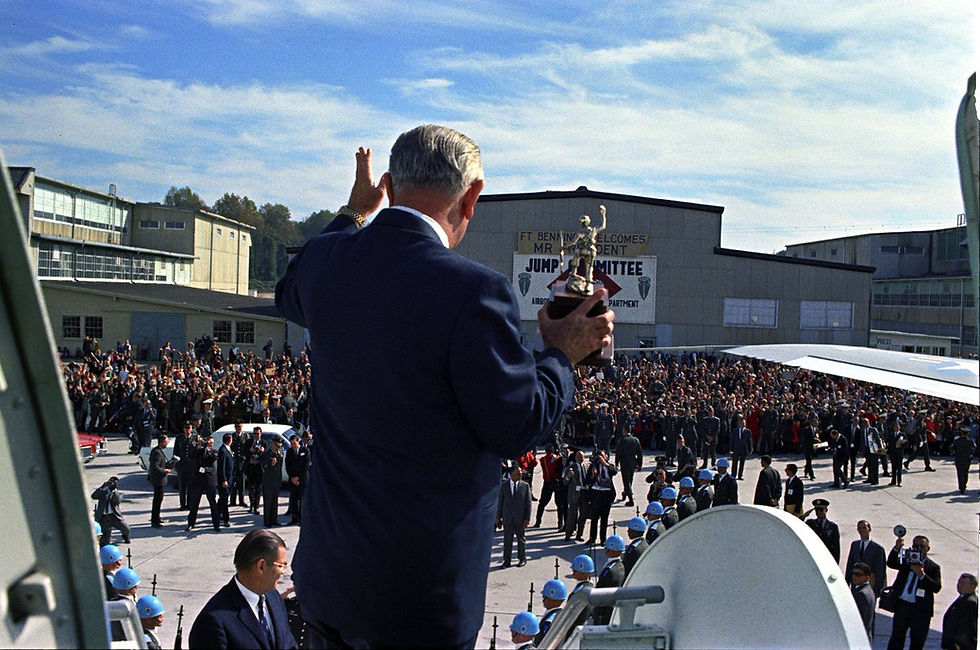
Looking back over the previous 140 years, from 1775 to 1918, we can now see why President Johnson called Fort Benning "a cradle, ... a college, and a crossroads." The establishment of Camp Benning in 1918 signaled the end of one era of American history and the beginning of another. The peacetime training of infantrymen was now a reality, something George Washington and other enlightened soldiers had always sought. How many lives this training has saved in battle will probably never be known. What is certain is the international reputation of the Infantry School as one of the finest military institutions in the world today.



I always enjoy reading articles that bring local history to life, and this one offers an interesting look at the origins of Fort Benning and the community behind its development. After reading stories like this, I usually play bitlife which is a life simulation game where every choice shapes a unique journey and every life unfolds differently.